
Kia Forte: Forward Collision-avoidance Assist (FCA) / FCA warning message and system control
The FCA system produces warning messages, warning alarms, and emergency braking based on the risk of a frontal collision, such as when a vehicle ahead suddenly brakes.
The driver can select the initial warning activation time in the User Settings in the LCD display. The options for the initial Forward Collision-Avoidance Assist include Early, Normal or Late initial warning time.
Collision Warning! (1st warning)
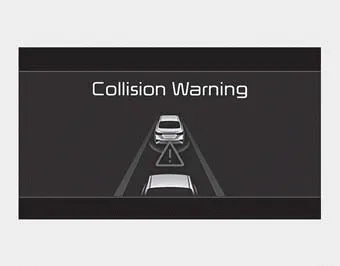
This warning message appears on the LCD display with a warning chime.
Additionally, the engine management system intervenes to help decelerate the vehicle.
- Your vehicle speed may decelerate
moderately.
- The FCA system limitedly controls
the brakes to preemptively mitigate
impact from a collision.
Emergency braking! (2nd warning)

This warning message appears on the LCD display with a warning chime.
Additionally, the engine management system intervenes to help decelerate the vehicle.
- The FCA system limitedly controls the brakes to preemptively mitigate impact from a collision. The brake control is maximized just before a collision.
System setting When the ignition switch is turned on, Forward Collision-Avoidance Assist (FCA) automatically gets activated. The system can be deactivated if the driver cancels the system from the instrument panel as follows : 'User settings → Driving assist → Forward Collision-Avoidance Assist' The warning light illuminates on the LCD display, when you cancel the FCA system.
In an emergency situation, the braking system enters in ready status for prompt reaction upon the driver depressing the brake pedal. The FCA system provides additional braking power for optimum braking performance when the driver depresses the brake pedal.
Other information:
Kia Forte 2019-2024 (BD) Owner's Manual: Radial-ply tires
Radial-ply tires provide improved tread life, road hazard resistance and smoother high speed ride. The radial- ply tires used on this vehicle are of belted construction and are selected to complement the ride and handling characteristics of your vehicle.
Kia Forte 2019-2024 (BD) Owner's Manual: Rear turn signal, Back up lamp bulb replacement
Rear turn signal lamp bulb replacement If the rear turn signal lamp (1) does not operate, have the vehicle checked by an authorized Kia dealer. Back up lamp bulb replacement If the back up lamp (1) does not operate, have the vehicle checked by an authorized Kia dealer.
Categories
- Manuals Home
- Kia Forte Owners Manual
- Sensor to detect the distance from the vehicle in front (front radar/camera)
- Drive mode integrated control system
- Your vehicle at a glance
- New on site
- Most important about car
